Journal · 2026-08-27 · Dallas, TX
Pain down the back of the leg: sciatica, or the muscle everyone blames it on
It usually starts as a deep ache in one buttock, in a spot you cannot quite reach. Then it begins travelling — down the back of the thigh, sometimes past the knee. Sitting makes it worse. Driving makes it much worse. People call it sciatica because that is the word available.
Two different things wearing the same coat
True sciatica means the nerve root is being irritated where it leaves the spine, usually by a disc. It tends to travel far, often below the knee, and it often brings pins and needles or numbness with it. Coughing or sneezing can spike it.
The other version starts in the buttock itself. The piriformis and the deep rotators underneath it sit directly on top of the sciatic nerve, and when they are short and irritated they both refer their own pain and press on the nerve. This one usually stops around the knee, feels deep and dull rather than electric, and hurts most after twenty minutes in a chair.
The distinction matters because they want opposite handling. A tight rotator responds beautifully to patient work. An angry nerve root does not, and pressing harder is exactly the wrong instinct.
What we do
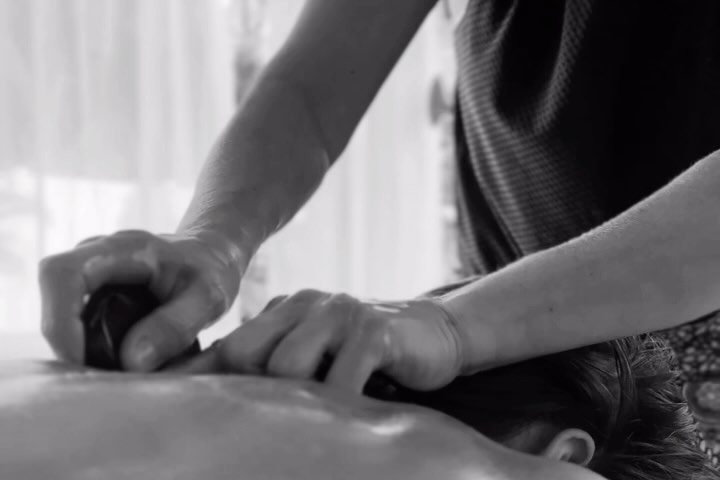
If it looks muscular, the session works the whole chain rather than the sore spot. Glutes, the deep rotators, the outside of the hip, the hamstring where it attaches at the sit bone, and the low back and psoas at the front, because a hip that has been held in flexion all day is part of why the back of it is unhappy.
The buttock work is slow and sustained rather than fast. This area does not respond to being attacked, and it is one of the few places where people genuinely feel the pain travel and then release under the hands.
If it looks like a disc, we work carefully around it, keep everything that is compensating comfortable, and say plainly that this one needs a doctor’s opinion before anyone gets ambitious with it.
What helps between sessions
Get off the wallet. Sitting on something in a back pocket for hours is a small, real cause of one-sided buttock pain, and it costs nothing to test.
Then the figure-four: lying on your back, ankle across the opposite knee, pull the supporting thigh gently toward your chest, a minute a side. Gentle. If it produces electricity down the leg rather than a stretch in the buttock, stop, and let a physician look at it first.
Sudden weakness in the foot, numbness in the saddle area, or any change in bladder or bowel control is not a massage question. That is an urgent medical one, today.
Read next
Massage before training or after: what the timing actually changes
Both are useful, but they are not the same session. What a short session before an effort does, what a session after does, and why race week is the wrong week to try either for the first time.

Foam rollers, massage guns and wooden tools: what they do and what they do not
Most of them work, within a narrow range, and most people use them for exactly the things they are worst at. An honest guide to what to keep in the cupboard.

Your first massage: the questions people are too embarrassed to ask
What you take off, what happens if you fall asleep, whether you have to talk, and the rest of what nobody explains because everyone assumes you already know.