Journal · 2026-08-29 · Dallas, TX
Face and head massage: the session people book last and then rebook first

Almost nobody books this first. It sounds like a facial, or like something decorative added to fill an hour. Then people have it once, usually as part of a longer session, and it becomes the thing they ask for by name.
The scalp is not a passive surface
There is a thin sheet of muscle and connective tissue over the skull, anchored at the forehead and at the back of the head, and it responds to sustained mental effort exactly like any other muscle: it holds.
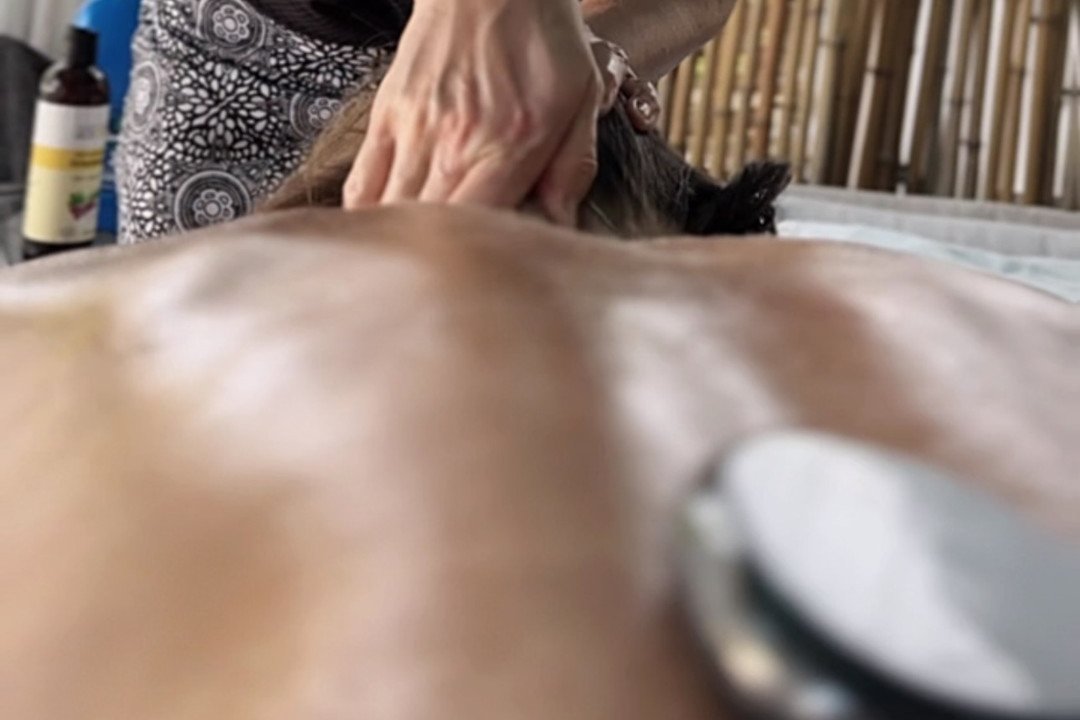
Most people have never had anyone touch it deliberately. When someone does, the reaction is often surprise at how tender it is, particularly along the ridge at the back of the skull and around the temples.
The jaw, which is where most of it lives
The masseter is remarkably strong for its size and most people clench without any awareness of doing it — in traffic, in meetings, and above all asleep. Held for years it becomes dense, tender, and a reliable source of temple ache, ear-adjacent discomfort and a face that feels tired by evening.
Working it from the outside, along with the temporalis at the temples and the small muscles under the cheekbone, is uncomfortable in a very specific way, and then it lets go, and people describe the whole lower face as feeling looser afterwards. A tired jaw the next day is common and normal.
The forehead, eyes and sinuses
Slow work around the brow, the bridge of the nose and along the cheekbones does two things: it releases the small muscles that hold a permanent low-grade frown from screen work, and it encourages drainage through an area that gets congested easily. During allergy season in Dallas that second effect is the reason people book.
This is not a treatment for sinus infection. It is useful for the dull, blocked, heavy-faced feeling that comes with allergies and dry indoor air.
Why it is so disproportionately relaxing
There is more sensory nerve supply in the face and scalp than almost anywhere else in the body. Slow, warm, unhurried input into an area that dense reaches the nervous system faster than the same work elsewhere.
It is the most reliable way we know to drop someone who arrives too wound up to lie still. Twenty minutes at the end of a session on the face and scalp changes the state people leave in.
How it is usually taken
Rarely on its own. Most people add it to the end of a full session, so the work runs neck, then scalp, then face, then back down — the whole chain rather than the top of it.
Oil in the hair is optional and worth deciding in advance. Ayurvedic head work uses warm oil generously and it is excellent; it also means washing your hair afterwards, which is fine if you know it is coming and irritating if you do not.
Sudden severe facial pain, new numbness, or a headache unlike your usual pattern belongs with a physician first.
Read next
Massage before training or after: what the timing actually changes
Both are useful, but they are not the same session. What a short session before an effort does, what a session after does, and why race week is the wrong week to try either for the first time.

Foam rollers, massage guns and wooden tools: what they do and what they do not
Most of them work, within a narrow range, and most people use them for exactly the things they are worst at. An honest guide to what to keep in the cupboard.

Your first massage: the questions people are too embarrassed to ask
What you take off, what happens if you fall asleep, whether you have to talk, and the rest of what nobody explains because everyone assumes you already know.