Journal · 2026-08-13 · Dallas, TX
Four hands: what the second therapist actually changes
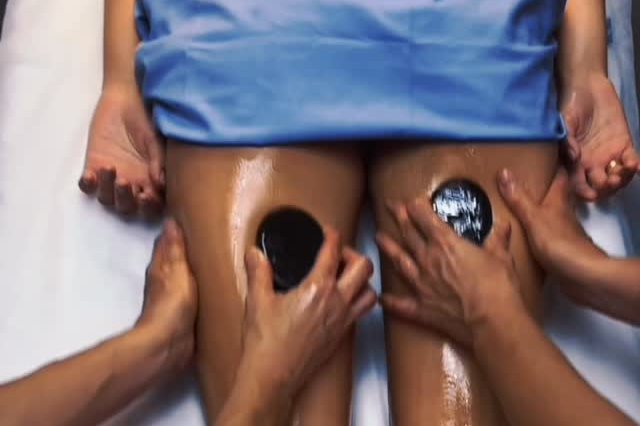
The first question is always some version of: is it just twice as fast?
Partly. You do get more of the body covered in the same hour, and for people who are short on time that alone is the reason to book it. But speed is the least interesting part.
Your brain cannot track two sides at once
During an ordinary massage you follow the hands. You may not notice you are doing it, but part of your attention is always tracking where they are and predicting where they go next. That tracking is a mild form of vigilance, and vigilance is exactly what stops people relaxing.
With two therapists working in mirrored, synchronised movements, the prediction task becomes impossible. Both sides of the body report at once, symmetrically, and after a minute or two the brain quietly gives up trying to follow.
That giving-up is the whole point. It is the fastest route we know to the state most people are actually paying for, and it arrives in minutes rather than in the last twenty of a normal hour.
Synchronised is the hard part
The technique is not two people doing whatever they would do individually. The strokes have to mirror — same speed, same pressure, same moment of contact and release. If one therapist is even slightly out of phase, the illusion breaks and it becomes exactly what people fear: two separate massages competing for your attention.
Elena works with her sister Natalia, and the honest reason it works is that they have worked together for years. This is not a technique you can improvise with a colleague you met that morning.
Who it is worth it for
People with full-body tension rather than one problem area. Someone who has said out loud that they cannot switch off. Anyone with ninety minutes and no time for a longer session. And it makes a genuinely memorable gift, which is why a fair share of these are booked by someone other than the person on the table.
It is a poor fit if you came in with one specific injury. Focused therapeutic work needs one therapist thinking about one problem, and we will tell you that rather than upsell.
What to expect afterwards
Disorientation, in the best sense. Most people take a minute to work out which way the room faces.
Give yourself a slow half hour afterwards, and do not schedule it before anything that requires you to be sharp.
Availability
Four-hands needs both therapists free at the same time, so it takes more notice than a regular session. Ask early rather than the day before.
Read next
Massage before training or after: what the timing actually changes
Both are useful, but they are not the same session. What a short session before an effort does, what a session after does, and why race week is the wrong week to try either for the first time.

Foam rollers, massage guns and wooden tools: what they do and what they do not
Most of them work, within a narrow range, and most people use them for exactly the things they are worst at. An honest guide to what to keep in the cupboard.

Your first massage: the questions people are too embarrassed to ask
What you take off, what happens if you fall asleep, whether you have to talk, and the rest of what nobody explains because everyone assumes you already know.