Journal · 2026-08-11 · Dallas, TX
Buffalo neck: what that lump at the base of your neck actually is

People describe it the same way almost every time. A pad, a hump, a lump right where the neck meets the shoulders. It appeared gradually, it does not hurt exactly, and it makes them self-conscious in photographs.
One of our clients called it a buffalo neck, and the name has stuck with us since.
What is actually in there
Three things, layered.
The top layer is fluid. The area sits at a natural drainage bottleneck, and when the tissue underneath is tight, lymph moves through it slowly. That is why the pad can look noticeably smaller on some mornings than others.
Under that is fascia — the sheet of connective tissue that wraps muscle. Fascia responds to sustained posture by thickening in the places that carry the load. Years of a head held slightly forward is exactly that kind of sustained posture.
And underneath both, the muscles themselves: upper trapezius, levator scapulae, and the small deep muscles at the base of the skull. They are not relaxing between working days. They are holding, quietly, all the time.
Fat is part of it in some people, but it is rarely the main part, which is why weight loss alone often does not change the shape much.
Why posture built it and posture will not remove it
The usual advice is to sit up straight. It is good advice and it is not enough on its own, because the tissue has already remodelled. Telling a shortened, thickened structure to lengthen by willpower does not work — you can hold the correct position for about twenty minutes before the old pattern quietly returns.
The order that does work is the reverse: release the tissue first, then re-train the position while the body can actually reach it.
What a session does
The work starts with drainage — light, slow, in the direction of the lymph nodes, to move whatever fluid is sitting there. Skipping this and going straight to deep pressure is a common mistake; you end up pressing on a swollen area, which hurts and helps less.
Then deeper work along the upper trapezius and the levator, and detailed work at the base of the skull, where a surprising amount of the tension anchors.
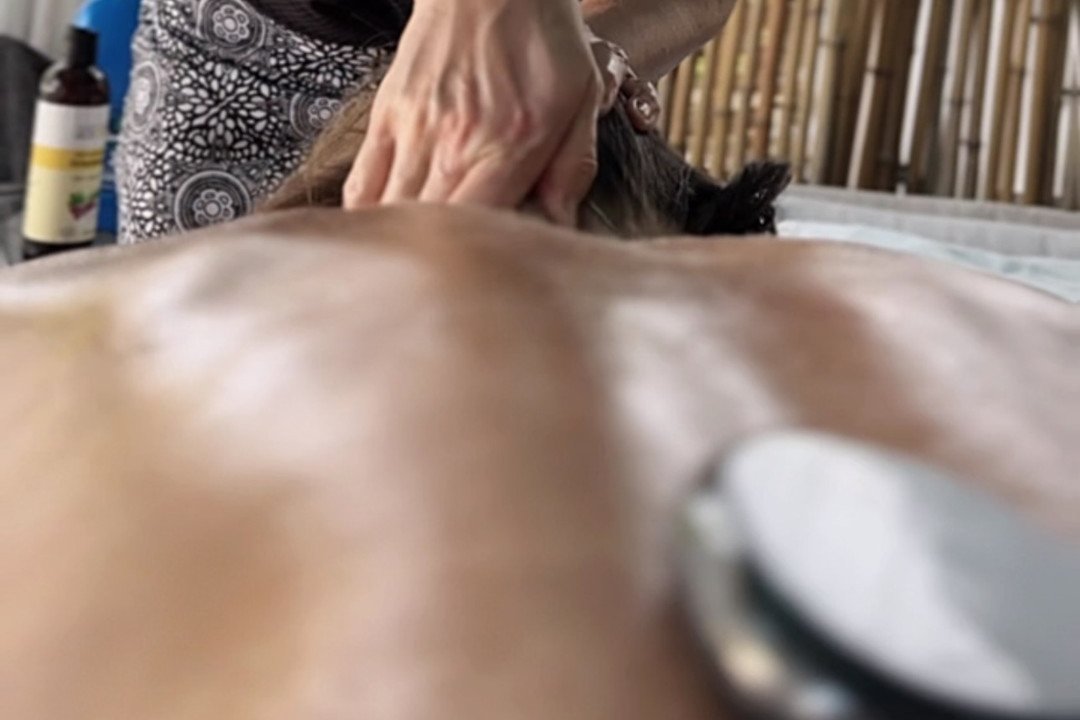
Cupping is often useful here. Because it lifts tissue rather than compressing it, it reaches the fascial layer in a way that hands alone struggle to.
How long it takes
A single session makes the area softer and usually looks visibly different the next morning. But this took years to build, and one visit does not undo it.
A course of six to eight sessions across a couple of months is the realistic path, with the position work happening in between. Our client with the buffalo neck went through several treatments before it dissolved, and she still follows the instructions she was given — which is the actual reason it has not come back.
When to check with a doctor first
A pad that appeared quickly rather than gradually, or that came alongside changes in weight, skin, mood or menstrual cycle, deserves a medical opinion before massage. There are hormonal and medication-related causes for fat pads in exactly this location, and those need a physician, not a massage therapist.
Read next
Massage before training or after: what the timing actually changes
Both are useful, but they are not the same session. What a short session before an effort does, what a session after does, and why race week is the wrong week to try either for the first time.

Foam rollers, massage guns and wooden tools: what they do and what they do not
Most of them work, within a narrow range, and most people use them for exactly the things they are worst at. An honest guide to what to keep in the cupboard.

Your first massage: the questions people are too embarrassed to ask
What you take off, what happens if you fall asleep, whether you have to talk, and the rest of what nobody explains because everyone assumes you already know.